Interior shading
Roller blinds for Eye of Africa's fairway-facing glass
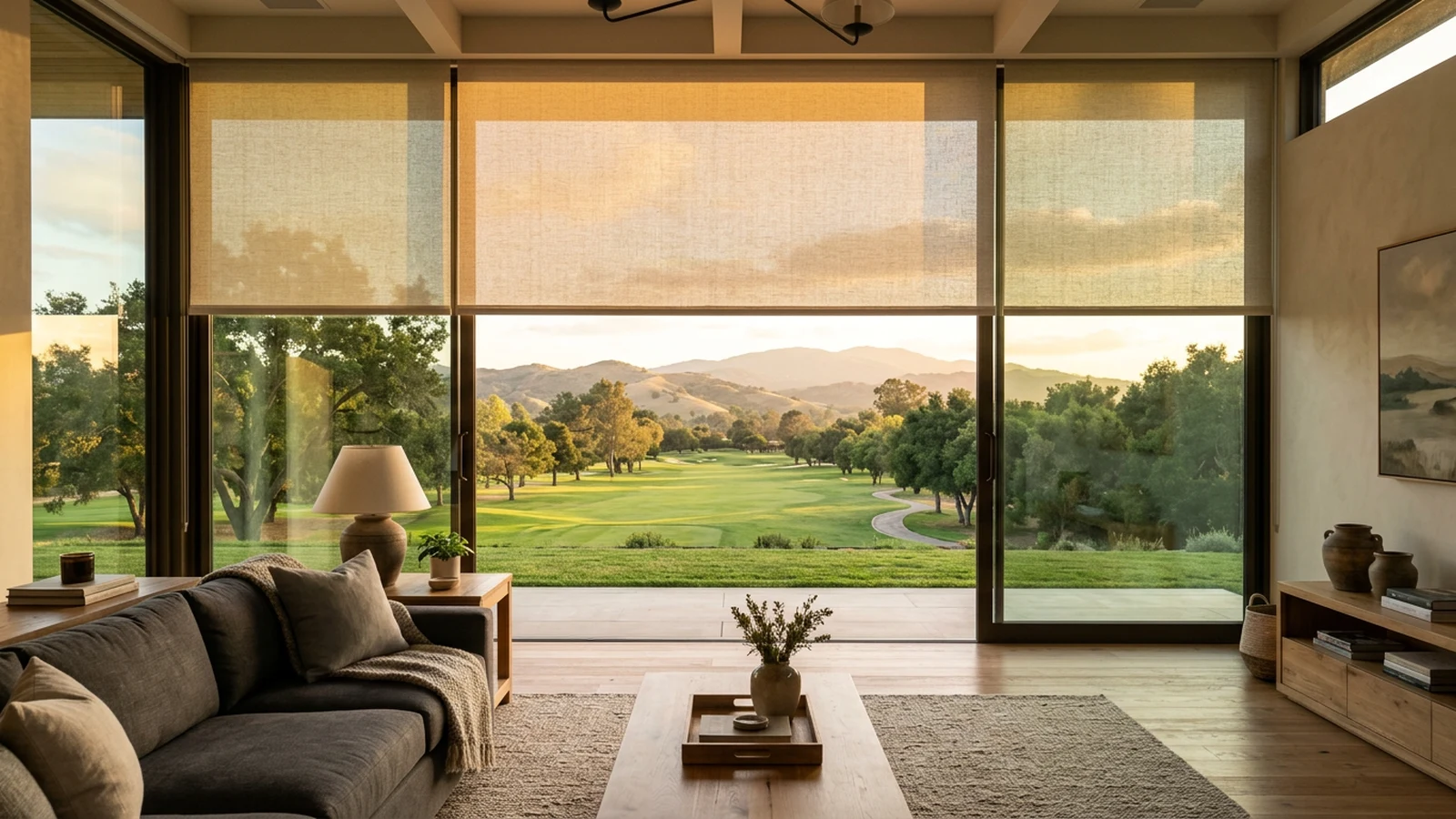
The everyday answer for the sliding doors and picture windows that face the course and the open veld beyond it — blockout, sunscreen, or both together on one clean bracket.
Built for a wall of glass with nowhere to hide from the sun
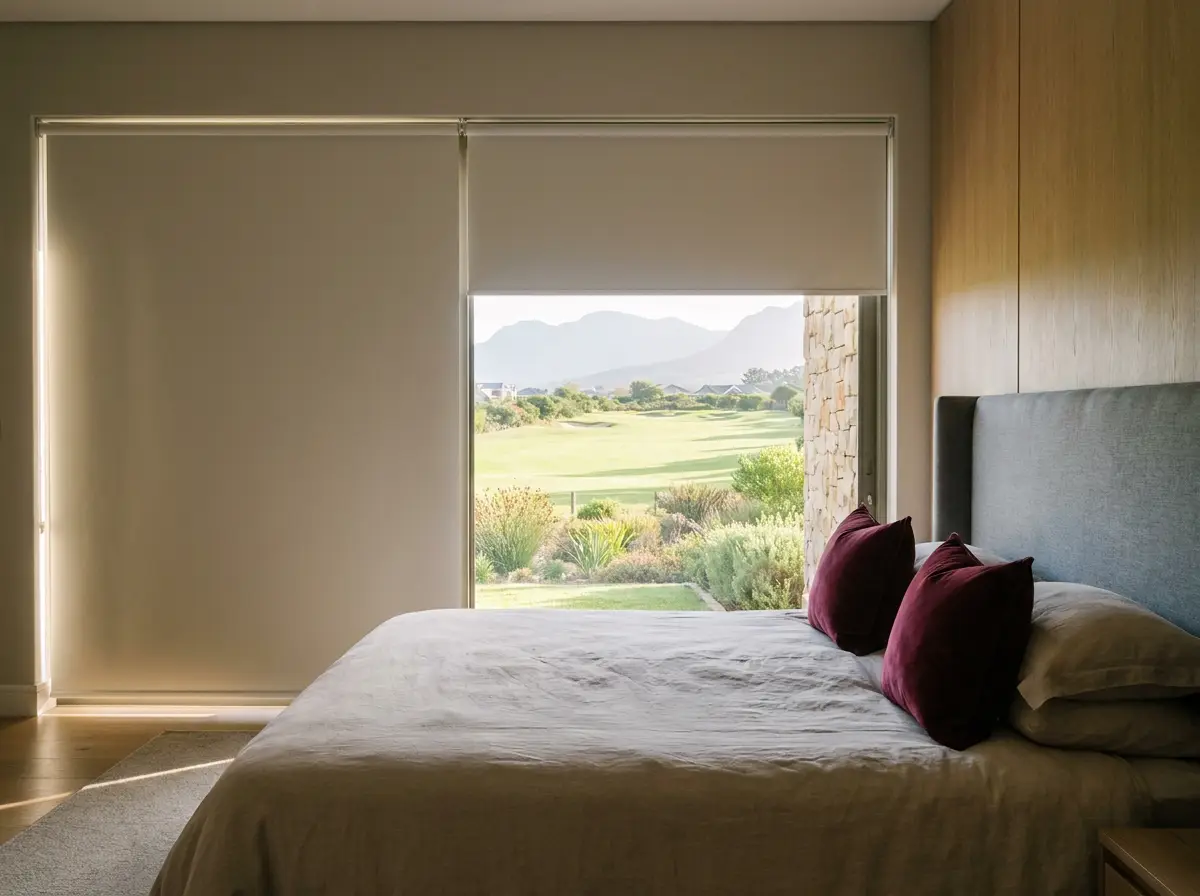
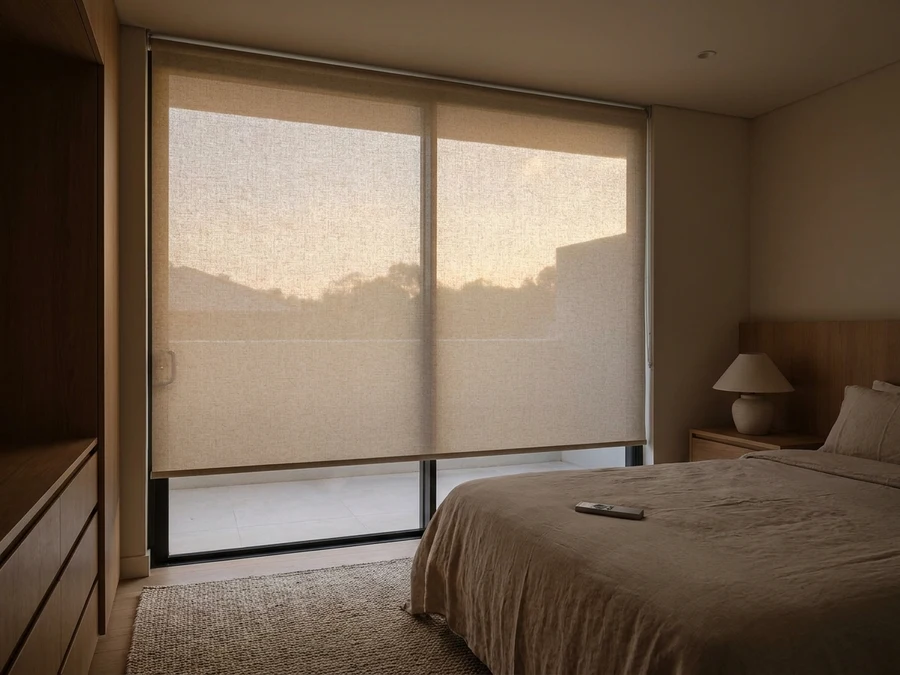
A roller is a fabric panel on an aluminium tube — spring, chain or motor driven, made to measure per window. It's the workhorse of the range for a good reason: on an Eye of Africa home where the biggest run of glass usually looks straight down the fairway or out over open ground, a roller gives you a clean, minimal line that doesn't compete with the view you bought the stand for.
Choosing your fabric
- Blockout — total light stop. The right call for bedrooms, nurseries and media rooms, with the side benefit of an extra insulating layer against summer heat and winter cold.
- Sunscreen (3%, 5% or 10% openness) — a mesh weave that cuts glare and UV while keeping the fairway and horizon visible. The lower the percentage, the more heat and glare it blocks and the less see-through it is; 3–5% is the standard for view-preserving sun control on a big pane of glass. It gives daytime privacy from the cart path, but that reverses at night with the lights on inside.
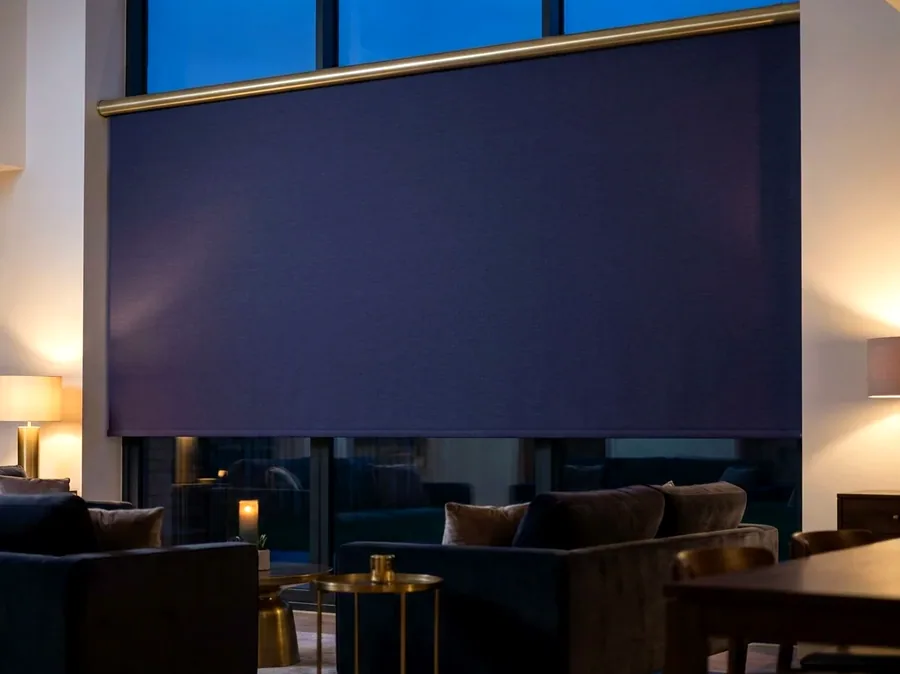 Light-filtering / translucent — softens the light and gives full privacy, with no view through — useful for bathrooms or a study that doesn't need the golf outlook.
The double roller: the estate favourite
Blockout and sunscreen on one bracket is the practical answer for any room with a view worth keeping — sunscreen down through the day for glare-free watching, blockout down at night so a lit room isn't on display to anyone still out on the course. It's the combination we fit most often on the fairway-facing side of the house.
Control options
Chain control comes with child-safe tensioners as standard. Spring-assist suits lighter, more frequently used blinds. For anything wide, heavy, or awkward to reach — above a double-volume window, across a run of stacking doors — motorisation is worth the conversation; a single blind rarely justifies it on its own, but a whole fairway-facing wall usually does.
Where a roller isn't the answer
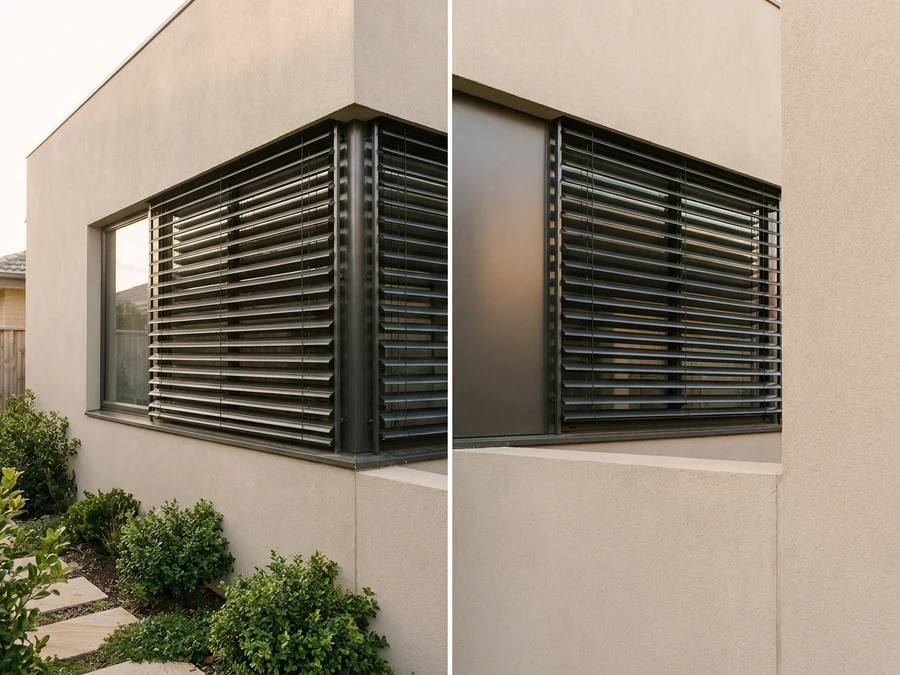
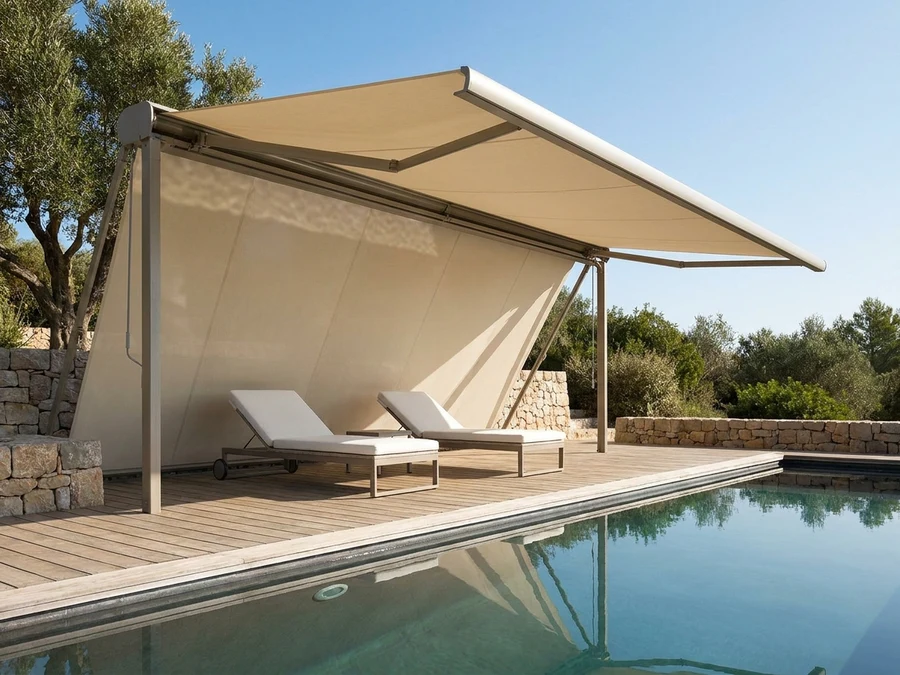
Very wide unbroken spans need either a join line in the fabric or a motorised, linked solution — your consultant will flag this at the measure, not after the blind is made. Out here, exterior-facing rollers also aren't the wind-rated answer for an open patio; that's what a venetian or a wind-sensored awning is for.
Rands, not adjectives
Every square metre of roller blind, fitted, comes in at R1,000 to R1,600 with a chain. Standard blockout occupies the lower half of that; a premium sunscreen, or two cloths on a double bracket over one opening, the upper. Fit a tube motor and every square metre comes in at R2,500 to R3,800 instead, which pays for the motor, whichever control you pick, and the commissioning.
Watch two things. Small windows break the arithmetic — a bathroom pane takes the same tube, brackets and ladder time as a fairway wall, so a minimum applies. And a range is a planning tool: your own openings get priced one by one after the free measure, on paper, before manufacture starts.
Ready to measure the fairway wall?
Free in-home measure, a written per-window quote, no obligation.
Book your free measureWhere we fit them
Fitting roller blinds across the Eye of Africa side of Midvaal
The double-roller answer — sunscreen for the view, blockout for the dark — travels well past the estate gate. We measure and fit the same way in Walkerville, Meyerton, Kliprivier and Henley-on-Klip.
Also consider
Shading that pairs well with rollers
Free to read, nothing to fill in
The Eye of Africa Sightline Handbook
Roller blinds are one answer among several, and which elevation you are dressing decides whether they are the right one. The Handbook works through the sun path here face by face, with the catch written next to every recommendation.
- Solstice sun bearings and midday angles for this latitude, with sources
- North, south, east and west — which room suffers, and when
- What we'd fit on each face, and the honest catch with each
- Five things only a tape measure at the window can settle